
Cryopreservation of sea urchin (Lytechinus pictus) embryos and development through metamorphosis
Victor D. Vacquier and Amro Hamdoun
Developmental Dynamics
October 10, 2025
Abstract
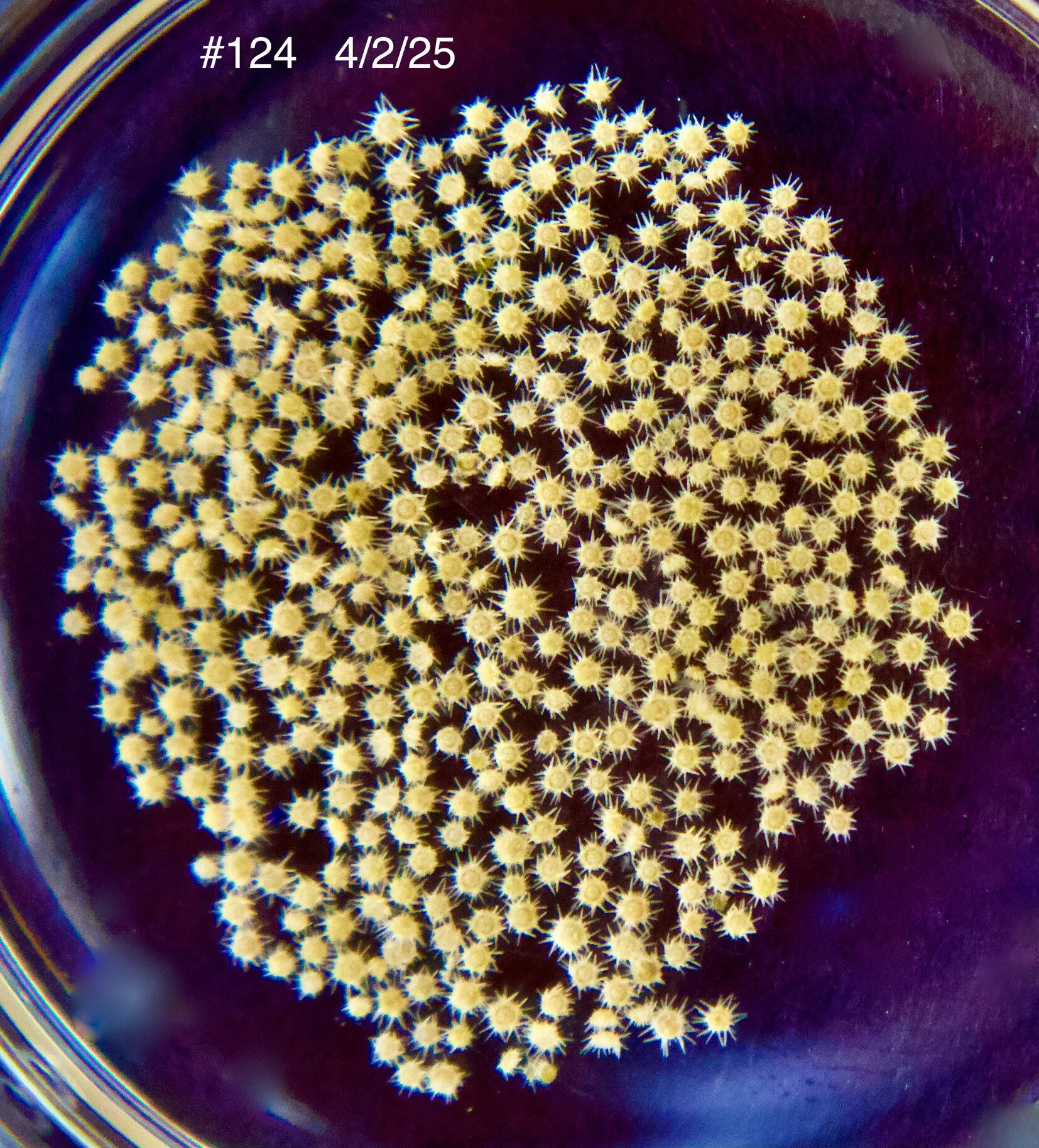
Sea urchins have contributed to knowledge of fertilization, embryonic development, and cell physiology for 150 years. Their evolutionary position, as basal deuterostomes, and their long background in developmental biology motivate establishing a genetically enabled sea urchin species. Because of its relatively short generation time of 4–6 months and ease of culture, our lab has focused on the California sea urchin Lytechinus pictus as a multigenerational model and produced knockout and transgenic lines using this species. To ensure that diverse genetic lines can be preserved, methods must be developed to cryopreserve gametes and embryos. We have previously reported methods for cryopreservation of sperm, but robust methods to preserve embryos remain lacking.
Here, we describe a relatively simple method to cryopreserve late gastrulae embryos of L. pictus. Importantly, we show that, after thawing and culturing, the embryos progress through larval development, undergo metamorphosis, and yield juvenile adults, indicating the method is robust.
The cryopreservation of embryos is an important advance that will facilitate the biobanking, sharing, and long-term preservation of diverse genetic lines. This method may also eventually prove useful for cryopreservation of embryos of other marine invertebrates.